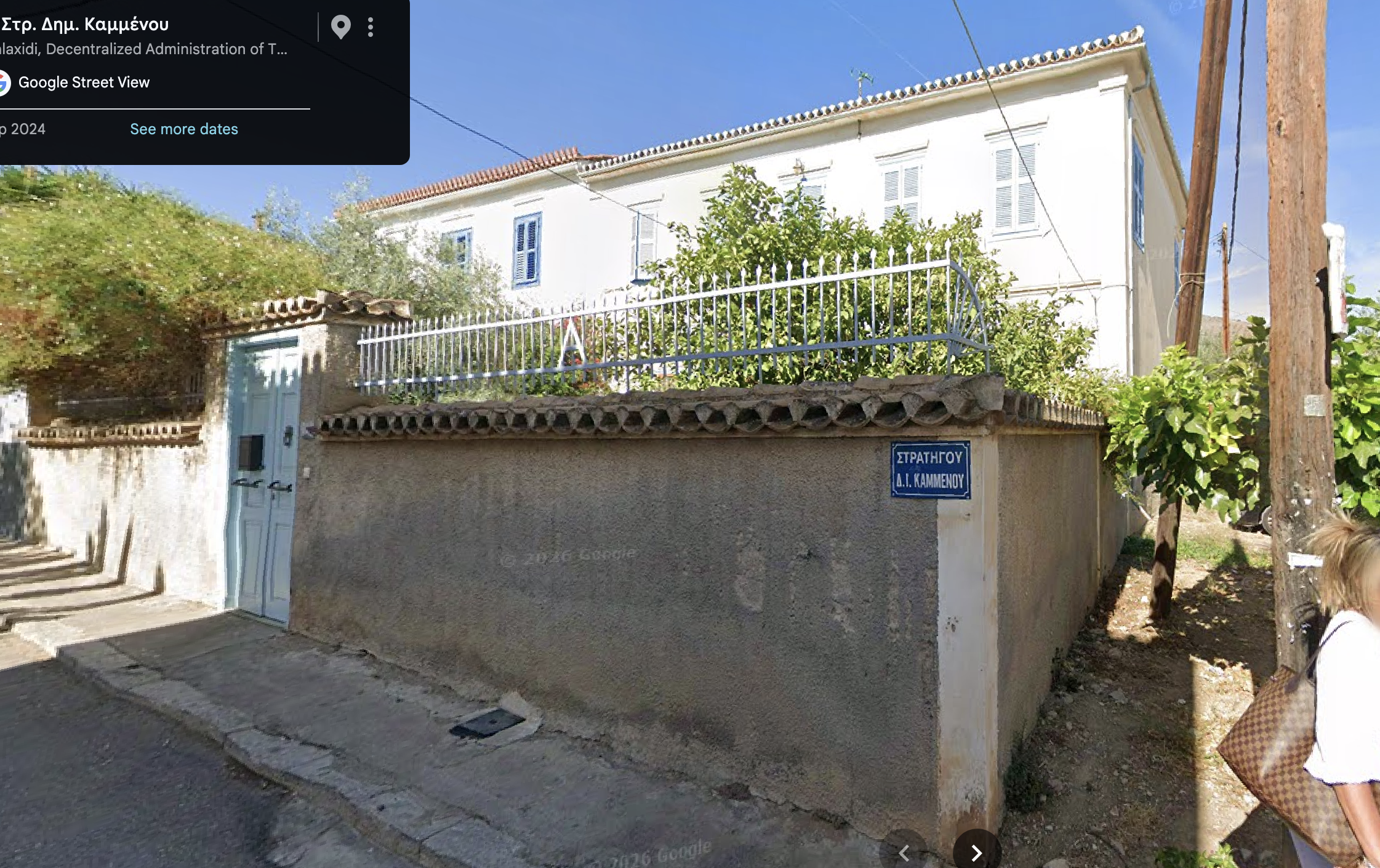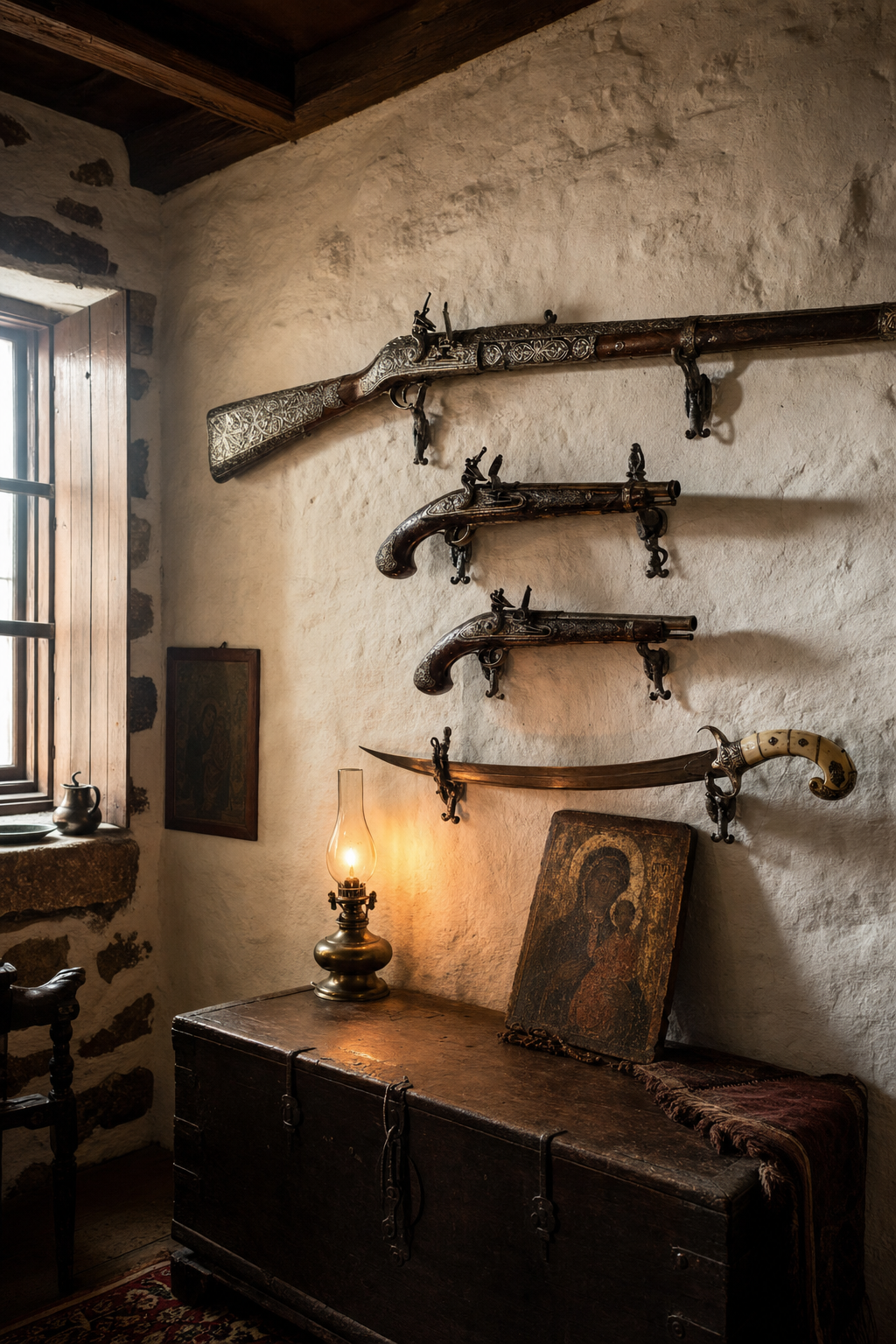
A two-storey stone mansion in Galaxidi — whitewashed walls, sea-blue shutters, a wrought-iron balcony and a walled courtyard of olive and vine. In its inner chamber it still guards the original 1821 weapons of a War-of-Independence chieftain, Captain Yiannis Mitropoulos. Own it, or sleep under its roof.
In Galaxidi, houses are not merely stone and lime — they are arks of memory. This mansion holds something rare: the authentic weapons of Captain Yiannis Mitropoulos, the chieftain who raised the flag of Liberty over the castle of Salona in 1821.
Two ways to step inside the story. Buy the house outright at €1,000,000 and become the keeper of a national relic — or stay from €800 a night and live, for a while, in a piece of the Greek Revolution.
The historian Takis Lappas wrote that the captain's deeds could be matched only by the warlords of Roumeli.
Mitropoulos and his men take up arms and march to the chapel of St Panteleimon, beside the cathedral of St Nicholas, to swear an oath of sacrifice. At the church of St John the Forerunner they declare their part in the Revolution. Galaxidi becomes one of the first towns of mainland Greece to raise the banner of freedom.
With powder and small cannon lowered from their ships, the Galaxidiots join the chieftain Panourgias of Amfissa and besiege the Turks inside the castle of Salona. After days the defence breaks — the first enemy fortress falls into Greek hands.
Ioannis D. Mitropoulos raises the flag of Liberty on the ramparts of Salona — a scene immortalised by the painter Louis Dupré in a lithograph now held by the Galaxidi Maritime Museum.
The Galaxidiots fight alongside the hero Athanasios Diakos. In the bitter defeat, Mitropoulos cuts off the head of Mitros Masavetas — Diakos's blood-brother — so the Turks could never claim it.
Shut inside the Inn of Gravia beside Odysseas Androutsos, besieged by thousands of Turks, Mitropoulos sees Halil Bey — the man who had captured Diakos at Alamana — and shoots him dead. Androutsos blessed the deed with the words below.
After Gravia and the battles of Nafpaktos, the captain returns home to Galaxidi. One night, as he sleeps in his house, he is killed with a sword. The assassin, a man named Varnavas, was no Galaxidiot — and is believed to have been sent by the Turks. A marble plaque in Galaxidi keeps his name alive.
"Long life to you, Mitropoulos. Such a reckoning not even the blessed Diakos could have hoped for." — Odysseas Androutsos, at the Inn of Gravia
At the heart of the house, the original weapons of Mitropoulos are kept — long kariofili muskets and silver-worked flintlock pistols of the age, the same lineage as those displayed today in the Galaxidi Maritime Museum.
The Maritime Museum of Galaxidi exhibits a collection of the military and naval guns its fighters carried. This house keeps the same thread — not behind glass, but inside a home that is lived in, that breathes, that remembers.
Each weapon is a chapter: the oath at St John's, the siege of Salona, the bullet meant for Halil Bey. The house does not exhibit objects — it safeguards a story.
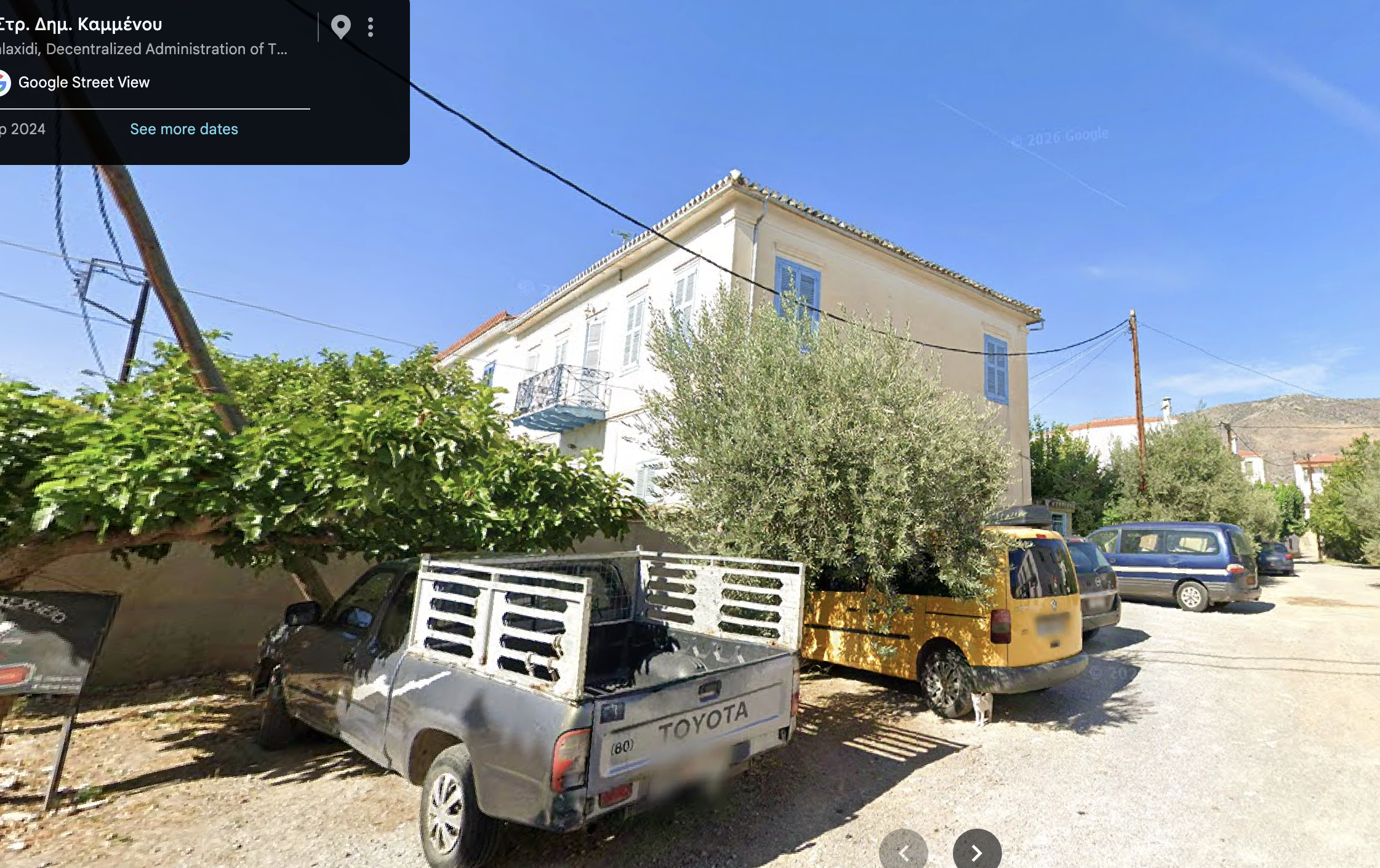
A two-storey neoclassical sea-captain's mansion in the protected old town of Galaxidi — a hipped terracotta roof, sea-blue timber shutters, a wrought-iron balcony on marble brackets, and a stone perimeter wall crowned with curved Byzantine tiles. Olive and climbing vine in the courtyard — Galaxidi at its purest. Two and a half hours from Athens, minutes from Delphi.
A captain's town that looks like an island, an hour from Delphi.
Galaxidi rose in the 19th century as one of Greece's great seafaring centres — neoclassical mansions built by ship-owning families, terracotta roofs above a sheltered double harbour, and one of the country's finest maritime museums. Quiet, protected, and only a short drive from the oracle of Delphi and the ski slopes of Parnassus.
With their armed caiques, the Galaxidiots secured safe passage for Greek ships across the Gulf of Corinth. The price was steep: the town was destroyed by the Turks three times — on 23 September 1821 (the worst), and again in May and November 1825.
A Galaxidiot too, dressed and speaking as an Albanian, he slipped past the Turkish guards to carry the letters of the besieged out of the Athens Acropolis. They called him "the pigeon". After liberation he was awarded a silver medal.
A house that guards a hero's weapons is not real estate — it is a trust. For sale at €1,000,000, or yours from €800 a night. Serious enquiries welcome — speak directly with Leonidas.
WhatsApp Leonidas →